

 my account
Myopia : The Importance of Early Detection for Academic Success
How do I know if my child is myopic?
Myopia in children, often linked to elongated eyeballs, can manifest in various ways and at different ages. Although not always symptomatic, here are some indicators to watch for:
- Difficulty seeing objects at a distance
- Frequent squinting or rubbing of the eyes
- Headaches
- Difficulty concentrating
Significant fluctuations in academic performance
Given that 80% of learning involves vision¹, a sudden decline in academic results may be due to undiagnosed vision issues.
Why is it crucial to monitor myopia from a young age?
Preventing myopia progression early on offers long-term benefits, including reducing the risk of future eye complications. Severe myopia is associated with an increased risk of serious eye conditions in adulthood, such as glaucoma or retinal abnormalities.
Early diagnosis also lowers the risk of advanced myopia, sometimes allowing for smoother adaptation to corrective methods.
To manage myopia and maximize chances of slowing its progression, your child's optometrist can suggest various options such as specially designed glasses or contact lenses for children with myopia control needs.
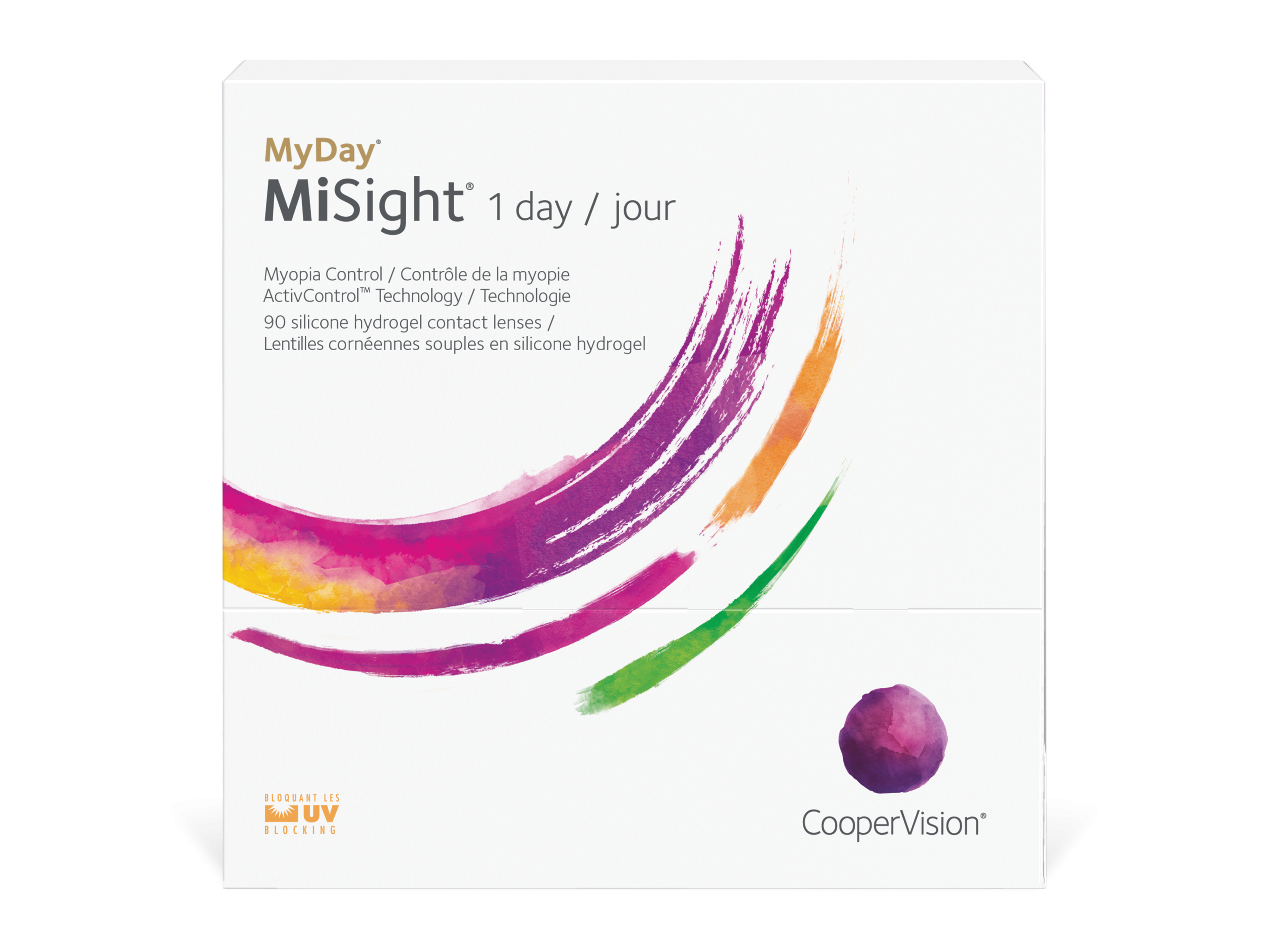
Contrary to what many parents believe, some children can safely wear contact lenses when they are recommended and monitored by an eye care professional. CooperVision’s MyDay® MiSight® 1-Day contact lenses are specially designed for children with nearsightedness. In addition to providing clear vision every day, they help slow the progression of nearsightedness thanks to their ActivControl® technology, developed to address one of the main factors associated with its progression*.
Designed for daily single-use, they offer a convenient solution for families: a new pair every day, with no maintenance required. To learn more about these lenses, consult our FAQ or consult your optometrist to see if they meet your child's needs.
The importance of annual eye exams for school-aged children
Currently, over one-third of the Canadian population is estimated to be myopic2. In 25 years, it's projected that 52% of the global population will be affected by myopia3. Regular vision monitoring for children is essential to ensure their academic development and long-term visual health.
Another crucial factor is that myopia is appearing earlier and progressing more rapidly than in previous generations. According to a study, myopia onset in children now occurs at ages 6 or 7, compared to 12 or 13 previously4.
For these reasons, an annual eye exam is recommended for school-aged children. Monitoring children's visual health from a young age is an investment in their future.
Is your child in school or starting soon? Schedule an eye exam if their last clinic visit was over a year ago.
FAQ
1. https://www.aoqnet.qc.ca/vision/apprentissage.php
2. https://opto.ca/eye-health-library/myopia-nearsightedness
3. Mameesh, M., et al. Facing the epidemic of myopia: Exploring the possibilities. Oman J Ophthalmol. May–Aug 2017; 10(2): 61-62. https://www.ncbi.nlm.nih.gov/p...
4. Yang M, Luensmann D, Fonn D, et al. Myopia prevalence in Canadian school children: a pilot study. Eye (Lond). June 2018; 32(6):1042-1047. https://www.nature.com/article...
*WARNING: Consult the patient information booklet or visit the CooperVision website for a complete list of indications and important safety information. This product may not be right for you. Consult your eye care professional.