

 my account
2 is better than one
With the purchase of two pair of complete glasses (prescription lenses and frame), get up to 50% off the lowest priced pair of lenses. Cannot be combined with any other rebate or promotion. Certains conditions may applied.
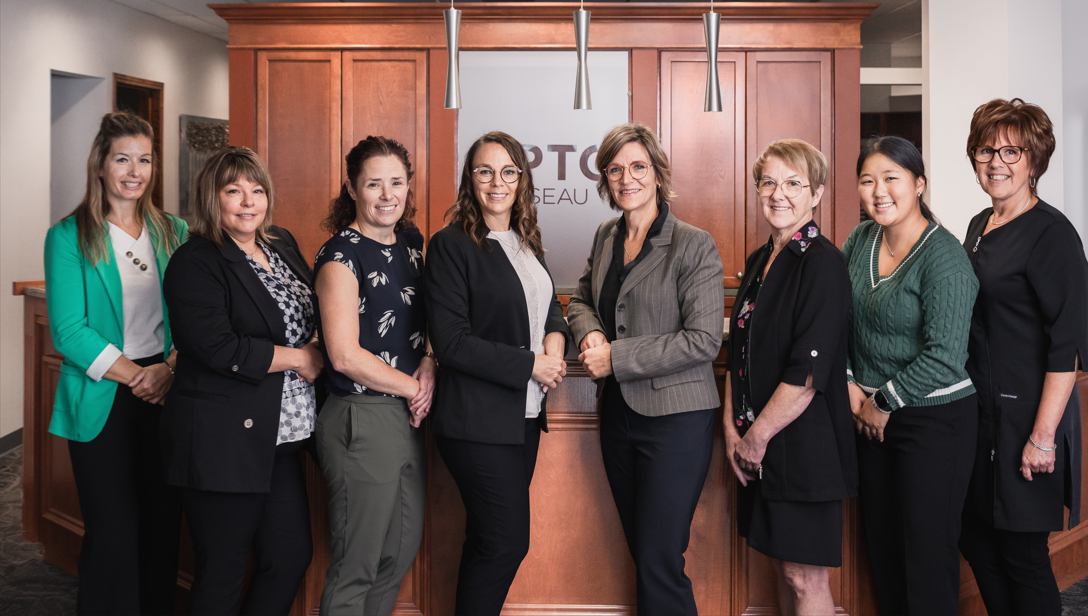
At every Opto-Réseau clinic, highly qualified eye care professionals are at your service. Our optometrists, opticians and staff are available to listen to your needs and offer suitable solutions. They strive to make sure that you are entirely satisfied with your visit and purchases.
Each of our clinics offers a wide range of services and a selection of frames to meet your every expectation. And receiving your contact lenses is now easy with our on-line ordering service.
We look forward to serving you soon!
Your eyes can reveal a great deal about your overall health, yet it is not uncommon for certain vision issues to go unnoticed because they cause no symptoms. A regular eye exam remains the best way to protect your vision and detect conditions early before they potentially worsen.
At an Opto‑Réseau clinic, your eye examination is conducted by an optometrist who takes the time to assess your lifestyle, family history, and specific vision needs. You’ll receive a comprehensive evaluation along with clear recommendations to help optimize your visual health.
The exam also helps detect conditions such as glaucoma, macular degeneration, cataracts, and diabetic retinopathy—often before the first symptoms appear. Depending on your situation, additional tests such as retinal imaging or optical coherence tomography (OCT) may be recommended for a more in-depth assessment.
Our optometrists are trained to detect eye diseases such as glaucoma, macular degeneration, cataracts, diabetic retinopathy and more.
We are also able to monitor your case. Your eye care professional can carry out pre- and post-surgery follow-ups, as well as monitor ocular manifestations of systemic diseases such as hypertension, diabetes and multiple sclerosis.
Eye exams specifically designed for contact lenses users are provided at Opto-Reseau. We can fit flexible, rigid (gas permeable), toric, multifocal and coloured lenses.
If you have an accident involving your eyes or notice an unexplained change in vision, your Opto-Réseau optometrist can assess your condition, prescribe the appropriate treatment, and refer you to the right resources, with an appointment or on our availabilities.
Our clinic includes a cutting, finishing and repair laboratory on site to better serve you, in addition to providing you with a fast and personalized service. Your glasses will be cut with the greatest precision for your complete satisfaction.
Explore our wide selection of frames for every style! Whether you’re looking for prescription or sunglasses, our expert advisors will help you pick a pair of personalized frames that are adapted to the face of your shape, your complexion, your hair colour, etc.
As vision goes down, most people find it increasingly difficult to continue their normal activities, even with the best possible glasses or contact lenses. If your vision drops to the point of being between 20/60 and 20/190, it is said that you are suffering from partial vision or low vision.
Many diseases and disorders can cause low vision. Our professionals can evaluate your functional vision, support you in learning about the use of your visual skills and evaluate your eye health. You will also get recommendations for the optimal use of residual vision and information about devices designed to improve visual operation.
Myopia, or nearsightedness, is a widespread vision disorder that’s currently on the rise. The earlier myopia develops in a child’s life, the greater the risk of significant visual impairment. There are various options for controlling the progression of myopia to reduce the risk of more serious vision problems in adulthood. These include contact lens options or ophthalmic lenses specifically designed to slow the progression of myopia. To learn more or to find out which options are right for you, consult our team.
A visual field is basically how far your eye can see in any direction without moving. Our cutting-edge tools allow us to precisely measure your peripheral and central vision. These tests help us detect certain conditions such as diabetes, glaucoma, stroke, and multiple sclerosis. Our basic eye exam includes a basic visual field test but your optometrist might recommend specialized tests or regular follow-ups depending on your health condition and visual impairments. The SAAQ might also require you to undergo a specific vision test as part of a visual assessment.
A photo of the various structures of the retina can be taken using a retinal camera allowing a more accurate examination of the fundus. This technology allows the detection of several diseases of the eye, such as diabetic retinopathy, macular degeneration, glaucoma and high blood pressure, to name just a few. It can also detect diseases that still have no symptoms.
The test requires only a few minutes of your time and does not require dilation in 90% of cases (drops that confuse vision). This test is therefore convenient and allows your eye care professional to monitor your eye health. The photos provide a basis for comparison between appointments to assess the evolution of the eyes or the effectiveness of treatments, if any.
Retinal imaging with ultra-wide field scanning laser (UWF ™) technology provides a fundus photograph that helps your optometrist diagnose, analyze, document, and track eye conditions that may be present in the periphery of your retina.
Traditional imaging of the retina in a small, or even wide, field allows only 10 to 100⁰ of the retina to be captured in a single image. Our clinic is equipped with an ultra-large field retinal imaging to capture 82% or 200⁰ of the retina, in a single image. The function of multiple shots and self-assembly of the optomap allows to visualize up to 95% or 225⁰ of the retina, leaving nothing to chance.
If you think about correcting your vision with laser refractive surgery, ask our eye care professionals if you are a good candidate. Our team of optometrists is able to do preoperative assessments to determine if you are a good candidate for surgery. Your professional will be able to advise you about the solution best suited to your situation according to your needs and available technologies.
Optical coherence tomography (OCT) is a technique for obtaining deep images of opaque or transparent materials with a resolution close to a microscope. In particular, the OCT scan provides detailed images of the interior of the retina to detect diseases such as multiple sclerosis, glaucoma, age-related macular degeneration (AMD), diabetic macular edema, or diabetic retinopathy.
Your eyes can reveal a great deal about your overall health, yet it is not uncommon for certain vision issues to go unnoticed because they cause no symptoms. A regular eye exam remains the best way to protect your vision and detect conditions early before they potentially worsen.
At an Opto‑Réseau clinic, your eye examination is conducted by an optometrist who takes the time to assess your lifestyle, family history, and specific vision needs. You’ll receive a comprehensive evaluation along with clear recommendations to help optimize your visual health.
The exam also helps detect conditions such as glaucoma, macular degeneration, cataracts, and diabetic retinopathy—often before the first symptoms appear. Depending on your situation, additional tests such as retinal imaging or optical coherence tomography (OCT) may be recommended for a more in-depth assessment.
Our optometrists are trained to detect eye diseases such as glaucoma, macular degeneration, cataracts, diabetic retinopathy and more.
We are also able to monitor your case. Your eye care professional can carry out pre- and post-surgery follow-ups, as well as monitor ocular manifestations of systemic diseases such as hypertension, diabetes and multiple sclerosis.
Eye exams specifically designed for contact lenses users are provided at Opto-Reseau. We can fit flexible, rigid (gas permeable), toric, multifocal and coloured lenses.
If you have an accident involving your eyes or notice an unexplained change in vision, your Opto-Réseau optometrist can assess your condition, prescribe the appropriate treatment, and refer you to the right resources, with an appointment or on our availabilities.
Our clinic includes a cutting, finishing and repair laboratory on site to better serve you, in addition to providing you with a fast and personalized service. Your glasses will be cut with the greatest precision for your complete satisfaction.
Explore our wide selection of frames for every style! Whether you’re looking for prescription or sunglasses, our expert advisors will help you pick a pair of personalized frames that are adapted to the face of your shape, your complexion, your hair colour, etc.
As vision goes down, most people find it increasingly difficult to continue their normal activities, even with the best possible glasses or contact lenses. If your vision drops to the point of being between 20/60 and 20/190, it is said that you are suffering from partial vision or low vision.
Many diseases and disorders can cause low vision. Our professionals can evaluate your functional vision, support you in learning about the use of your visual skills and evaluate your eye health. You will also get recommendations for the optimal use of residual vision and information about devices designed to improve visual operation.
Myopia, or nearsightedness, is a widespread vision disorder that’s currently on the rise. The earlier myopia develops in a child’s life, the greater the risk of significant visual impairment. There are various options for controlling the progression of myopia to reduce the risk of more serious vision problems in adulthood. These include contact lens options or ophthalmic lenses specifically designed to slow the progression of myopia. To learn more or to find out which options are right for you, consult our team.
A visual field is basically how far your eye can see in any direction without moving. Our cutting-edge tools allow us to precisely measure your peripheral and central vision. These tests help us detect certain conditions such as diabetes, glaucoma, stroke, and multiple sclerosis. Our basic eye exam includes a basic visual field test but your optometrist might recommend specialized tests or regular follow-ups depending on your health condition and visual impairments. The SAAQ might also require you to undergo a specific vision test as part of a visual assessment.
A photo of the various structures of the retina can be taken using a retinal camera allowing a more accurate examination of the fundus. This technology allows the detection of several diseases of the eye, such as diabetic retinopathy, macular degeneration, glaucoma and high blood pressure, to name just a few. It can also detect diseases that still have no symptoms.
The test requires only a few minutes of your time and does not require dilation in 90% of cases (drops that confuse vision). This test is therefore convenient and allows your eye care professional to monitor your eye health. The photos provide a basis for comparison between appointments to assess the evolution of the eyes or the effectiveness of treatments, if any.
Retinal imaging with ultra-wide field scanning laser (UWF ™) technology provides a fundus photograph that helps your optometrist diagnose, analyze, document, and track eye conditions that may be present in the periphery of your retina.
Traditional imaging of the retina in a small, or even wide, field allows only 10 to 100⁰ of the retina to be captured in a single image. Our clinic is equipped with an ultra-large field retinal imaging to capture 82% or 200⁰ of the retina, in a single image. The function of multiple shots and self-assembly of the optomap allows to visualize up to 95% or 225⁰ of the retina, leaving nothing to chance.
If you think about correcting your vision with laser refractive surgery, ask our eye care professionals if you are a good candidate. Our team of optometrists is able to do preoperative assessments to determine if you are a good candidate for surgery. Your professional will be able to advise you about the solution best suited to your situation according to your needs and available technologies.
Optical coherence tomography (OCT) is a technique for obtaining deep images of opaque or transparent materials with a resolution close to a microscope. In particular, the OCT scan provides detailed images of the interior of the retina to detect diseases such as multiple sclerosis, glaucoma, age-related macular degeneration (AMD), diabetic macular edema, or diabetic retinopathy.