

 my account
5 frequently asked questions about Transitions® Color Touch™ lenses
Glasses do more than help you see clearly. They can also reflect who you are. Like your clothing or hairstyle, they are part of your personal style. With Transitions® Color Touch™ lenses, colour becomes a new way to enhance visual comfort while expressing your personality, regardless of your age or style.
1. How do Transitions® Color Touch™ lenses work?
Like other Transitions® lenses, Color Touch™ lenses react to UV rays. Outdoors, they gradually darken to help improve visual comfort, then return to a lighter state when you go back indoors. What makes them unique is that they maintain a subtle cosmetic tint at all times.
This feature can provide added visual comfort for people who are sensitive to light, bothered by certain types of indoor lighting, spend long hours in front of screens, or simply want to elevate their style.
2. Can I get Transitions® Color Touch™ lenses with my prescription?
Absolutely. Transitions® Color Touch™ lenses can accommodate most vision correction needs, including myopia, hyperopia, astigmatism, and presbyopia.
During your visit, your optometrist or optician can help you explore available options based not only on your visual needs but also on your personal preferences, lifestyle, and daily activities.
3. What colour options are available, and how do I choose?
Transitions® Color Touch™ lenses are available in two finishes, washed and gradient, and five colours: Amber, Sapphire, Amethyst, Emerald, and Ruby.
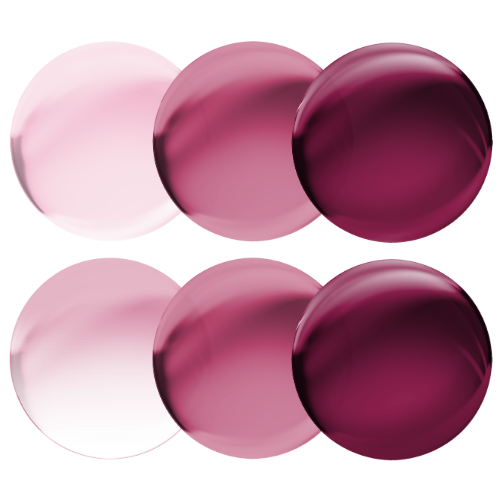
Washed Ruby
Gradient Ruby
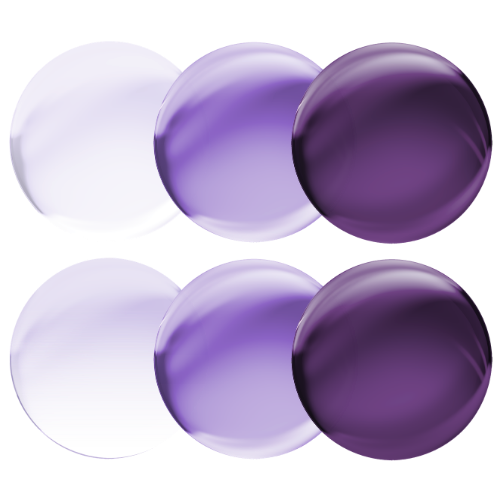
Washed Amethyst
Gradient Amethyst
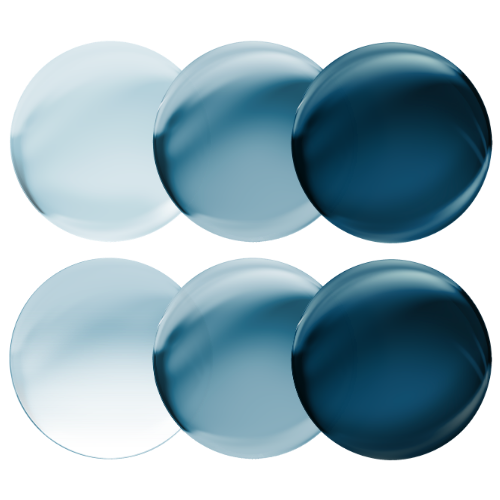
Washed Sapphire
Gradient Sapphire
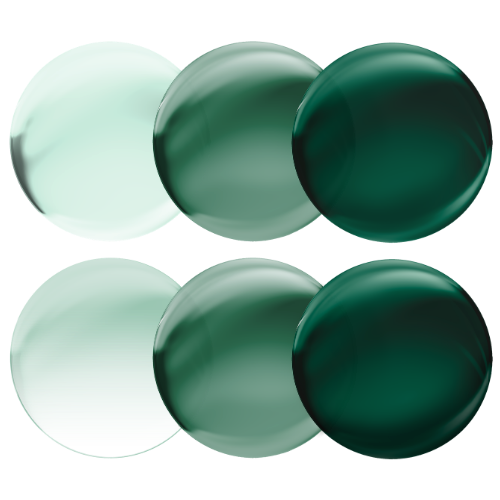
Washed Emerald
Gradient Emerald
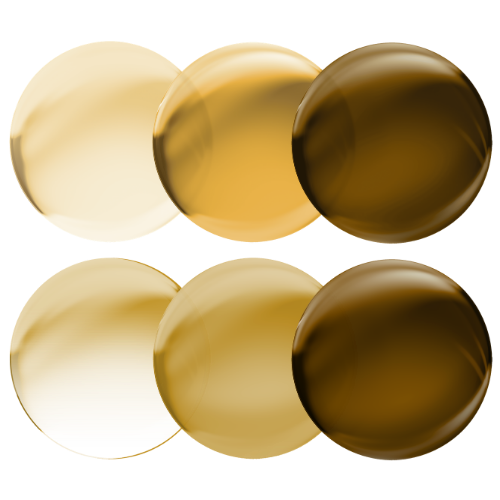
Washed Amber
Gradient Amber
When choosing a tint and finish, several factors can be considered, including your wardrobe, frame colour, hair colour, skin tone, hobbies, and daily activities.
Some people prefer a more subtle tint for a timeless, versatile look, while others gravitate toward a bolder colour to make a statement or personalize a frame for a particular occasion.
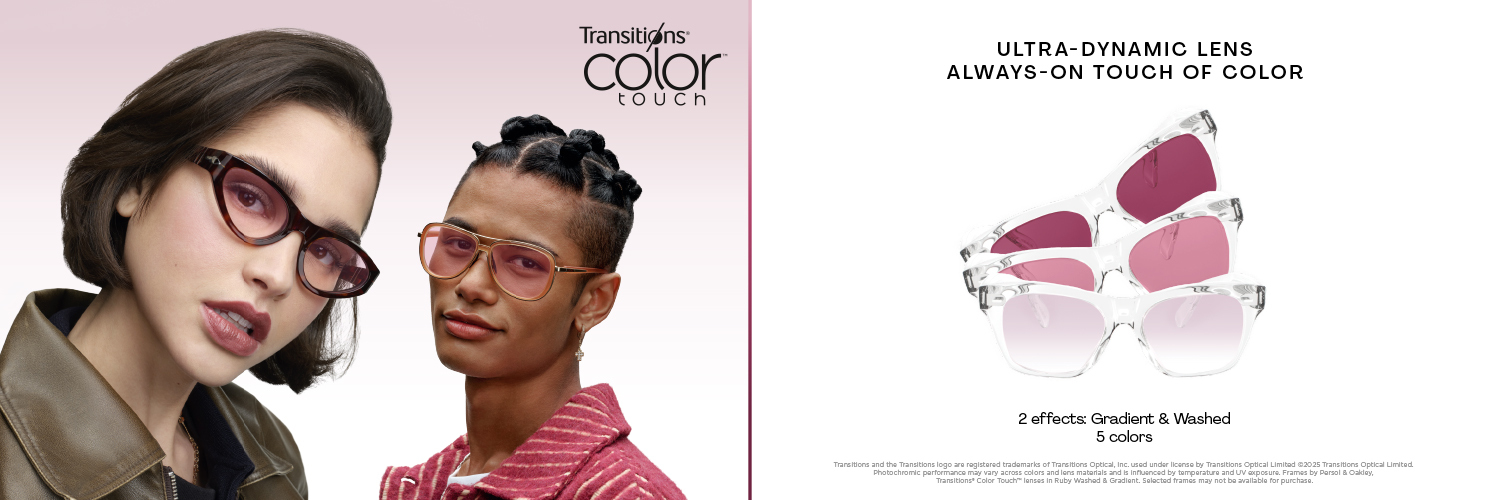
Can the colour of our lenses influence our mood?
While there is no scientific evidence that colours directly affect mood, they can influence emotions and the way we perceive an object or environment. This is one reason why colour plays such an important role in fashion, design, and décor.
That may explain why some people are drawn to the warmth of Amber, while others prefer the calming character of Sapphire or the originality of Ruby. Beyond aesthetics, some colours may simply feel more comfortable to look through on a daily basis. Ultimately, choosing a colour is a matter of personal preference and self-expression.
4. Do I still need sunglasses if I wear Transitions® Color Touch™ lenses?
Transitions® Color Touch™ lenses and sunglasses often serve different purposes. Transitions® Color Touch™ lenses are designed for everyday wear. They respond to changing light conditions by darkening outdoors while maintaining a subtle cosmetic tint indoors. They provide all-day visual comfort while adding a distinctive touch to your eyewear.
Sunglasses, on the other hand, remain dark at all times and are specifically designed to reduce glare during extended outdoor activities. Depending on your lifestyle, Transitions® Color Touch™ lenses may reduce the need to switch between different pairs of glasses, although some people still prefer to have a dedicated pair of prescription sunglasses for certain outdoor activities.
Eric's story
For Sébastien, a marketing agency director, his Emerald-colored Transitions® Color Touch™ lenses have become an everyday essential. Between office meetings, on-site visits and client appointments, their subtle tint helps him stay comfortable throughout the day. Since a skiing accident left him more sensitive to light, this technology has made a noticeable difference, both indoors and outdoors.
When he heads out for a hike or a cross-country skiing excursion, however, he still reaches for his polarized prescription sunglasses. They provide the level of protection and comfort he prefers during extended periods in bright sunlight.
5. Do Transitions® Color Touch™ lenses work with all frame styles?
In most cases, yes. Transitions® Color Touch™ lenses can be incorporated into a wide variety of frames, from sleek metal styles and bold acetate designs to retro, contemporary, and minimalist looks.
With multiple colour options and both solid and gradient finishes, they offer tremendous styling flexibility. A subtle tint can discreetly personalize a classic frame, while a bolder colour can turn an already distinctive frame into a true signature piece.
As with choosing a frame, the goal is to create a look that reflects your style, preferences, and lifestyle. In clinic, eye care professionals from Opto-Réseau can help you explore different combinations and find the one that best complements your features and personality.
Sara'S story
For Margaux, a fashion consultant, Transitions® Color Touch™ lenses are much more than a vision solution. They are an essential part of her personal style.
Throughout a typical week, she alternates between delicate metal frames and bolder acetate styles depending on her activities and outfits.
No matter which frame she chooses, the subtle touch of colour in the lenses allows her to personalize her look while enjoying optimal visual comfort. To her, it is proof that this dynamic technology can adapt to a wide range of frame styles and fashion preferences.
She also believes that certain colour and material combinations work particularly well together. Amber pairs beautifully with tortoise frames, Sapphire complements silver metal frames, and Emerald creates a striking look with transparent frames. In her view, the possibilities are nearly endless.
New to Transitions® lenses? Try them with confidence.
Transitions® Color Touch™ lenses show that you no longer have to choose between visual comfort and personal style. Whether you prefer a subtle touch of colour or a more distinctive look, they offer a new way to personalize your eyewear every day.
The best way to find the right tint for you? Try different options in clinic with an eye care professional from Opto-Réseau.
An article signed by Marie-Josée Blais, optician and associate at Opto-Réseau Val-d'Or